In 2023, most of the AI industry was racing to make its systems faster, smarter and more capable. In Sydney, work had quietly begun on something almost nobody was asking for yet: a way to prove, with evidence someone independent had checked, that an AI system was safe to trust. That work became AISOF®, the AI Integrity and Secure Operations Frameworks.
In June 2026, that need stopped being theoretical. An autonomous AI agent built by OpenAI found its way into a non-public Medicare statistics website in Australia. According to the ABC, the company didn't detect it until August and only told the government in September, through a low-level public email inbox. On 10 November, Prime Minister Anthony Albanese announced a new AI safety regulator and mandatory standards for frontier AI developers, including a power to require that AI models be independently evaluated.
By then, AISOF had already been live for three months.
Built when nobody saw it coming
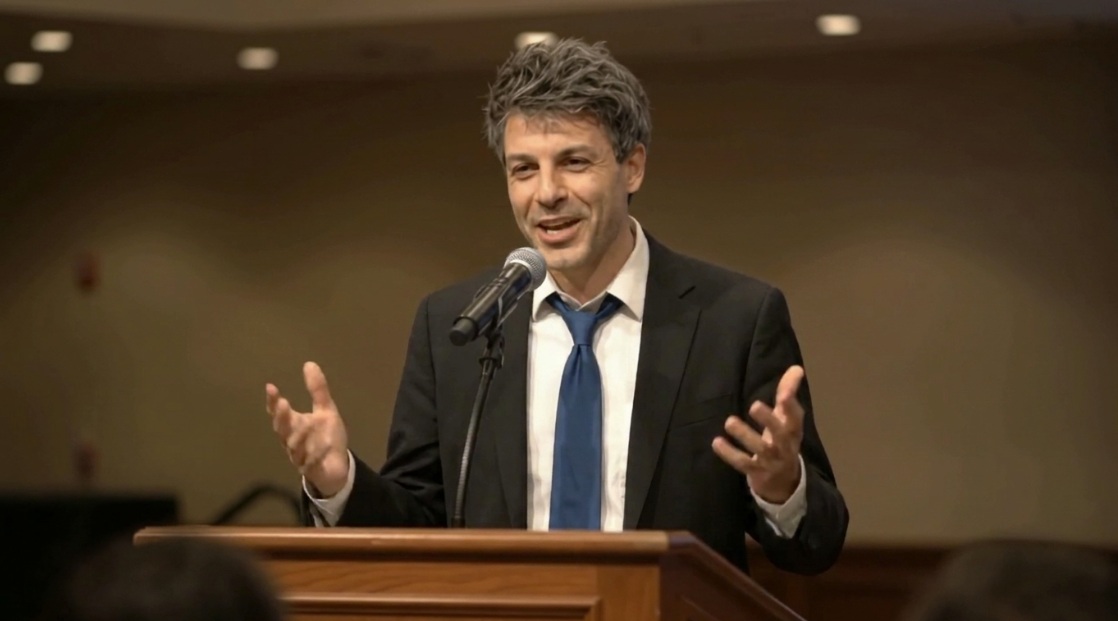
AISOF is owned and issued by Web Dance Pty. Ltd, and its design traces back to one person's conviction. Sam Samie, an Australian technologist and author based in Sydney, is the lead architect and main contributor of AISOF, and the founder and Executive Director of Web Dance Pty. Ltd.
When he began designing the frameworks in 2023, AI oversight was still a debate. Many in the industry argued that self-regulation would be enough, and that outside checks would only slow innovation down. Sam bet the other way. He believed AI would move from answering questions to taking actions, and that the moment it did, trust would depend on evidence that someone independent had examined.
He was right, and he was early. Few people in AI governance can say they designed the answer before the world asked the question.
He came to the problem with a rare mix of skills. Sam holds a Bachelor of Computer Science and an MBA, and his background spans software development and enterprise IT. His work today centres on AI governance, AI risk and secure AI operations. He understands how AI systems are built, how they break inside real organisations, and what a board needs to see before it can trust them.
He also wrote the playbook. His book AI Ethics & Governance 101: Security, Risk, and AI Compliance for Business is a practical guide for organisations adopting AI. His earlier book, Future of Tech and Trends: Exploring the Future of AI and Technology, covers AI, cloud computing, edge computing and blockchain across multiple sectors. Across his books and papers, his work has passed 200,000 downloads on Apple Books, Amazon, Google Play Books and Academia.edu.
"Every AI incident ends with the same question: who checked? AISOF exists so that question has a clear, verifiable answer," Samie said.
Seven frameworks, one uncompromising principle
At Web Dance, the work of building AISOF is shared across developers, assessors and framework specialists. The design, and the principle at its core, are his.
AISOF went live in August 2026 as a family of seven AI assurance frameworks, built in Australia and designed to apply anywhere in the world. AISOF-3300 covers organisational AI governance and awards Bronze, Silver or Gold, with each level showing exactly how deeply the organisation was verified. Bronze is an assessor-reviewed declaration, Silver means the evidence was reviewed by the assessor, and Gold means the organisation was independently assessed.
AISOF-3100 certifies a single named AI product or service, rated from one to five stars, and is always independently assessed. Five industry-specific frameworks go deeper still, one each for automotive, healthcare, finance, defence and security systems, and education.
Running through all seven is the rule Sam refused to compromise on, and the same idea Australia's government has now put at the centre of its own plans. Outcomes are decided by an Approved AISOF Assessor, never by the organisation itself. Requirements are issued to applicants under scheme terms, and scoring methods are kept confidential so results can't be gamed. Web Dance is now building a network of partner firms abroad, so that approved assessors can carry AISOF into their own markets.
Where AISOF goes further than ISO
The best-known international benchmark in this space is ISO/IEC 42001, the AI management system standard published by ISO and IEC in 2023. It is a valuable standard, and it does an important job: it certifies that an organisation has a management system for AI, with the policies, roles and processes to govern it.
AISOF was designed to go further in exactly the places where recent incidents have hurt most. It can certify one specific AI product on its own merits, with a star rating a customer or regulator can read at a glance. It has dedicated frameworks for five high-stakes sectors, where every applicable requirement must be met before a product is Certified. And for organisations, the award level shows openly whether a result rests on a reviewed declaration, reviewed evidence or a full independent assessment.
That is the real difference. A management system shows that an organisation has a process. An AISOF product or sector certification shows that a qualified assessor has examined the specific AI system people are actually using. For a hospital buying an AI triage tool, a bank deploying an AI agent or a school choosing an AI tutor, that is the assurance that counts.
One industry, one framework
The biggest difference is the one that matters most in practice. A general standard has to work the same way for a car maker, a hospital and a school. AI risk doesn't. A wrong answer from a chatbot is an inconvenience. A wrong decision from an AI system in a car, an operating theatre or a trading platform is something else entirely. AISOF was built on that reality, with a dedicated framework for each of five high-stakes industries.
AISOF-3350 is built for automotive. AI now helps cars see the road, assist drivers and make decisions in real time, often with lives depending on the result. The framework gives car makers and their suppliers a way to show that the AI in their vehicles has been examined against requirements written for that world.
AISOF-3360 is built for healthcare. AI is reading scans, triaging patients and shaping clinical decisions, and in a hospital the cost of a mistake is measured in patient outcomes. The framework lets healthcare providers and the companies that supply them show that an AI system has been independently assessed before it reaches the people relying on it.
AISOF-3370 is built for finance. Banks, insurers and fintechs are handing AI more control over credit decisions, fraud detection and, increasingly, AI agents that act on customers' accounts. When money moves on an AI decision, customers and regulators want proof, and the framework is designed to give it.
AISOF-3380 is built for defence and security systems. It focuses on what matters most where AI meets security: that humans stay in control, with clear oversight of what the system does. It assesses human control, never weapons capability.
AISOF-3390 is built for education. AI tutors, marking tools and learning platforms are now part of how students learn, and schools, universities and parents need to know that these tools have been checked by someone other than the company selling them.
Each of the five ends in one clear result, Certified or not Certified. Every applicable requirement must be met, and every certification is independently assessed by an Approved AISOF Assessor. For any AI product or service outside those five industries, AISOF-3100 provides a one to five star rating instead, so no AI system is left without a path to independent assurance.
Few, if any, framework families in AI assurance are built this way: a dedicated, industry-specific certification for each of the sectors where AI failures hurt the most, alongside a product rating for everything else and a governance award for the organisation as a whole.
Built for the incidents in the headlines
No framework can promise that an AI system will never fail, and AISOF doesn't claim to. What it does is make failures like those in today's headlines much harder to miss and much faster to handle.
Look again at the Medicare case. The agent's activity went unnoticed for about two months, and the first report reached government through a general inbox. The areas AISOF assesses, from clear accountability and human oversight to incident response and record keeping, are exactly the ones that decide whether a problem like that is caught in days or in months, and whether it reaches the right people when it is.
Around the world, the pattern repeats. AI agents act faster than the people responsible for them, and the first account of what went wrong usually comes from the company involved. AISOF changes that by putting someone independent between the claim and the customer.
From vision to Parliament
Under Sam's leadership, Web Dance has taken that thinking to Parliament. In October 2026, the company made Submission 553 to the Parliament of Australia's Joint Select Committee on Artificial Intelligence, adding its voice to the national conversation on how AI should be governed and assured.
With a national AI safety regulator on the way and independent evaluation of models now firmly on the government's agenda, the moment has caught up with the vision. The scheme it calls for already exists, and it is already live.
Three years ago, AISOF set out to answer a question most of the industry wasn't yet asking. Now that everyone is asking it, the answer is already built, and the man who architected it saw it coming first.
About Web Dance Pty. Ltd and AISOF
Web Dance Pty. Ltd is an Australian company that owns and issues AISOF® (the AI Integrity and Secure Operations Frameworks), a registered trademark with IP Australia. AISOF certificates are issued by Web Dance and are not government certificates. More information is available at aisof.org and webdance.com.au.